by Chris Harris
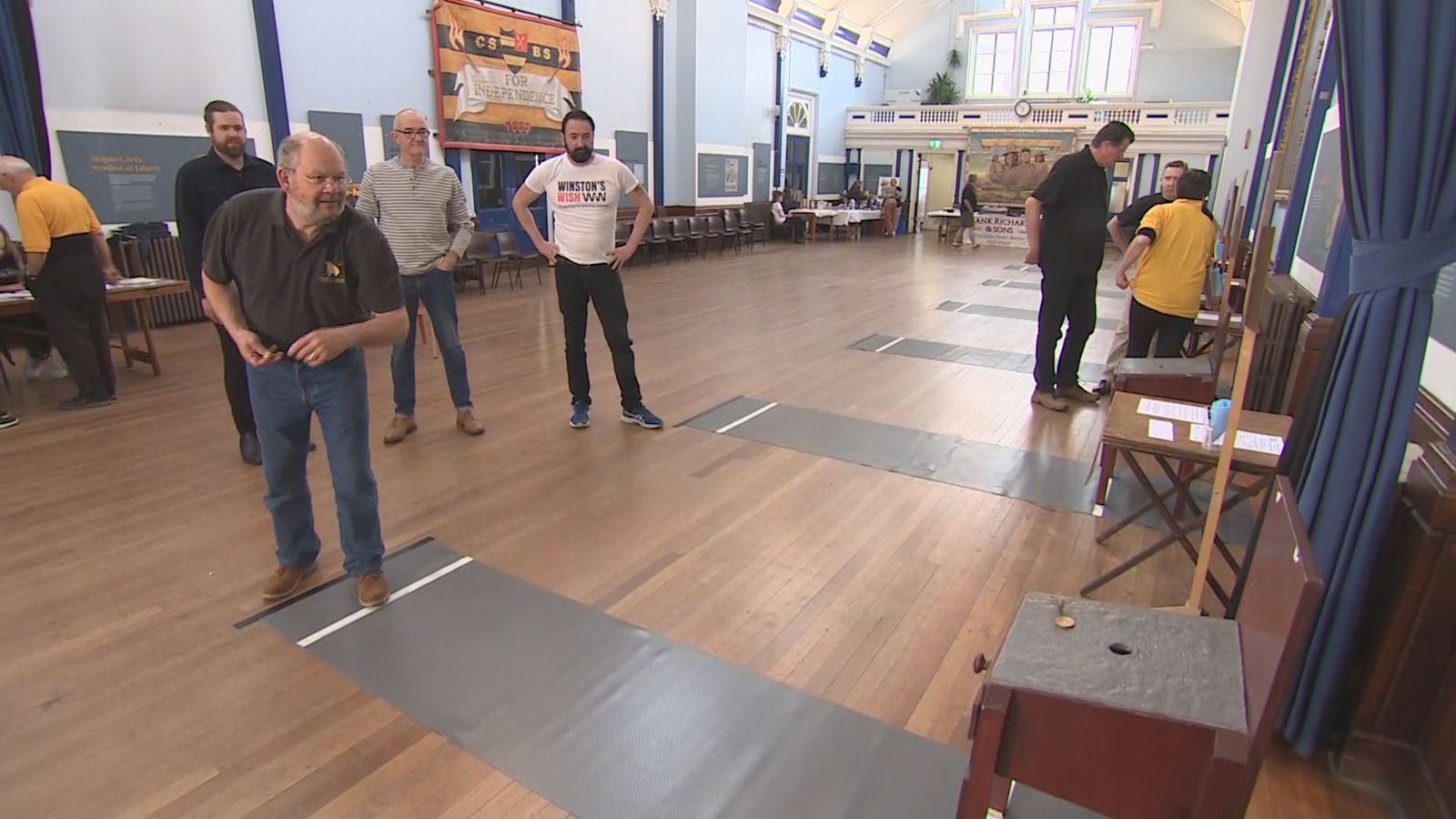
For centuries, Sussex was deeply tied to the sea. Sailors, merchants and dock workers moved constantly between English ports and South America. Wherever ships travelled, games travelled too. Pubs and taverns were natural meeting places where crews exchanged stories, songs, habits and pastimes. Darts spread. Cards spread. Dominoes spread. There is every reason to believe Toads travelled in exactly the same way.
It is easy to imagine the process. A sailor learns the game in a Shoreham or Brighton alehouse, spends an evening mastering the rules over several pints, then carries the idea aboard ship. Weeks later, in a dockside tavern thousands of miles away, another group of men are throwing metal discs at a wooden target while arguing about scoring.
That is often how culture spreads in reality—not through grand historical events but through ordinary people, long voyages, boredom and alcohol.
Over time, however, the South American versions developed lives of their own, evolving into something far more elaborate than their Sussex ancestor.
The Frog at the Top
In Sussex, Toads remains a relatively simple game. Players throw brass or metal discs onto a lead-topped board containing holes worth different scores. The appeal lies in its straightforwardness.
South America took the concept in a rather more imaginative direction. In Sapo, which literally translates as “frog” or “toad”, the target often features a cast metal frog mounted prominently at the top of the board. The ultimate objective is to land a coin or metal disc directly into the frog’s open mouth, scoring the highest number of points. It is wonderfully eccentric.
The boards themselves became increasingly decorative, often resembling pieces of folk art rather than sporting equipment. Elaborate arches, painted details, brass fittings and multiple scoring targets transformed them into objects worthy of display in their own right. Somewhere along the way, a simple pub game merged with local traditions and became something uniquely South American.
The atmosphere surrounding the game evolved too. Matches are frequently accompanied by music, food, beer and, occasionally, gambling. In many respects, they preserve the communal spirit that once surrounded English pub games before regulations and changing social habits gradually stripped much of that culture away.
Sussex’s “Secret” Was Never Really Secret
Perhaps the most amusing aspect of the story is the way it challenges Sussex’s sense of ownership. For generations, local players have spoken about Toads as though it were a hidden county treasure, an obscure tradition understood only by a select group of Sussex pub regulars.
Meanwhile, thousands of miles away, entire communities have been playing closely related versions of the same game with equal passion for generations. What many assumed was a tiny local oddity turns out to be part of a much larger story connecting ports, sailors, migration and working-class recreation across continents.
In fact, the discovery makes Toads more interesting rather than less. The game stops being merely a quirky Sussex survival and becomes part of a forgotten network of maritime culture—one of countless traditions ordinary people carried around the world long before anyone invented the word globalisation.
There is something rather fitting about that. A simple pub game survives not because institutions protected it or corporations promoted it, but because generations of ordinary people enjoyed playing it enough to teach it to somebody else. Across oceans, languages and cultures, the basic appeal remained exactly the same.
Throw a piece of metal at a target, share a drink, argue about the score and enjoy the company.
Sometimes that is all a tradition needs to survive.

 Welcome to Denham nr Lewes