by Chris Harris
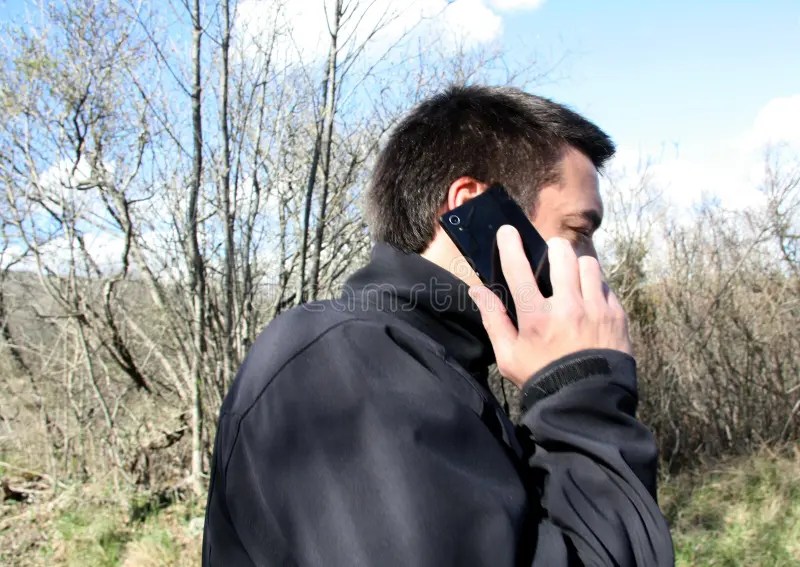
Unusually, I don’t actually plot my short stories. I start with nothing more than an idea, go for a walk, begin dictating and see what happens. I don’t know who the main characters will be, what they will do or, in most cases, how the story will end. They simply evolve as I tell it. Something will trigger an idea. Good and Proper, the last story in my first book, was inspired by my friend Pam joking about her cycling around her village on an old bike. A character evolved and by the end, the story had evolved into her helping to bring down a south coast crime lord.
This isn’t something I’ve consciously decided to do as an alternative to “proper” writing. It’s simply how my brain works, and I’ve gradually realised that it particularly suits the sort of alternative, slightly anarchic fiction I enjoy writing. More importantly, it makes writing enormous fun.
The Story Evolves as Fast as I Can Think
I have a racing brain, sometimes a hindrance to life, sometimes a godsend. One thought produces another, which produces another, and dictating while walking allows me to use that rather than fight against it putting down randomly whatever pops into my head. A character appears because I suddenly need somebody. I give them a name, they say something, and almost immediately I start discovering who they are and other characters that can evolve from them.
The same thing happens with the world around them. People acquire relationships, histories, grudges and secrets without any of it having been planned. A minor character can suddenly become important. Someone I thought might matter can disappear completely. A pub, house, family or village starts developing a history of its own. The world isn’t being constructed according to a blueprint; it’s evolving organically inside my head.
Walking and dictating are important to this. Sitting at a computer gives me too many opportunities to interfere. I can go backwards, reconsider a sentence, change a word or start editing something that hasn’t even been written yet. When I’m walking, I’m physically moving forwards and so is the story. I have to keep up with it.
The Reader Is Following the Same Journey
I think this is where much of the energy in my stories comes from, and some of them are as breathless as the change of direction within them. When I’m dictating, the story is moving at approximately the same speed as I’m thinking. Something occurs to me, I say it, and what I’ve just said triggers the next thought. The story bumps along in real time.
Later, the reader experiences something remarkably similar. They don’t know that a particular character is about to appear because, when I was creating the story, neither did I. They don’t know that a conversation is about to go in a completely unexpected direction. Neither did I. They don’t know how it’s going to end. Very often, at the equivalent point in writing it, I didn’t either.
I love that connection because I feel I’m really bringing the reader along on a real journey with me rather than fabricating some literary yarn. I’m not leading the reader along a route I’ve meticulously mapped beforehand. In a sense, they’re retracing the journey my imagination made first. I’m perhaps half a mile down a country lane inventing it; months later they’re sitting in a chair reading it, but we’re encountering events in much the same order and with much the same lack of foreknowledge.
That’s very different from knowing beforehand that Fred will enter the pub, meet Susan and discover she’s been having an affair with Brian. If I already know all of that, part of the excitement has gone. I’d much rather not know Fred exists until he suddenly walks through the door. Then I’ll find out what happens to him.
The Payoff Is Energy and Fun
There are obviously disadvantages to working this way. Improvisation produces repetition, dead ends and things that simply don’t work. That’s where editing comes in, but I’m increasingly wary of editing so heavily that I remove the energy that created the story in the first place.
My rule is simple: don’t edit the imagination; edit the obstacles. Remove the unnecessary repetition, fix the confusion and cut the section where the momentum disappears. But don’t automatically remove the strange diversion, the unplanned character or the slightly rough edge simply because conventional writing wisdom says it shouldn’t be there. Quirkiness is readable, engaging and keeps the reader alert to sudden changes and therefore hopefully fully concentrated. It’s like the difference between being enwrapped in TV programme or watching one where you are checking up on your phone, putting the second half off until another day.
There’s something quite punk about the whole process. I don’t want every instrument recorded separately, corrected, quantised and assembled into a technically perfect piece of music. I’d rather have the band in the room, count one, two, three, four and start playing. There might be the occasional bum note, but hopefully there’s some energy in the performance.
And ultimately, that’s the real payoff. Writing this way is tremendous fun. I can leave home with the vaguest idea and return an hour later having created a family, a village, a feud, a liar, an idiot, a disastrous marriage and perhaps a completely unnecessary Labrador. None of them existed when I put my shoes on.
#Writing a Book #Writing a Novel #Book Writing #Writing Blog #Novelist

 Welcome to Denham nr Lewes